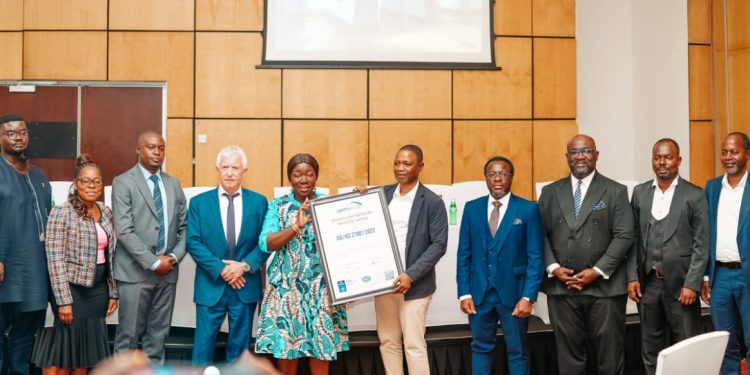

On Thursday, the Spain-Ghana Chamber of Commerce (SGCC), in partnership with EuroCham Ghana, the Ghana-Netherlands Business & Culture Council (GNBCC), the Pelican Hotel and the Royal Netherlands Embassy, hosted its much-anticipated Business Breakfast Meeting & Business Exhibition on the theme “Tax Dispute Resolution and Tax Litigation.”The well-attended session brought together CEOs, CFOs, legal advisors, and compliance leaders for a highly practical discussion on preventing tax disputes and navigating Ghana’s evolving regulatory landscape.
The meeting offered valuable insights on how to navigate tax-related challenges and mitigate business risks. The event featured presentations on Tax Dispute Resolution and Tax Litigation.
Mr Abeku Gyan-Quansah, Partner & Director at PwC Ghana, outlined why companies should avoid tax disputes at all costs. He highlighted that disputes:
- Consume time and financial resources
- Take months or years to resolve
- Disrupt business operations
- Carry significant uncertainty when escalated to litigation
He noted that most disputes stem from documentation gaps, VAT errors, withholding tax issues, transfer pricing exposures, and late engagement with GRA officials.
Strong internal systems, audit-ready documentation, early engagement with GRA, and the use of Alternative Dispute Resolution (ADR) significantly reduce risk.
Dr. Kweku Ainuson, Partner at AB Lexmall & Associates, took participants through the full lifecycle of tax litigation, from first audit query to potential Supreme Court appeal.
He explained how litigation often arises from weak controls, misinterpretation of tax laws, insufficient evidence, and disagreements during audits. His presentation demonstrated how technical, lengthy, and resource-intensive litigation can be.
Companies were strongly advised to litigate only as a last resort because:
- The burden of proof lies on the taxpayer
- Costs are high and outcomes unpredictable
- Most disputes could be prevented with strong internal systems
His conclusion summarized the morning’s message:
Tax governance—not litigation—should be the real strategy
Panel Discussion: Practical Experiences from All Sides
A distinguished panel enriched the conversation with real-world perspectives:
- Dr. Dominic Naab (GRA)
- Mrs. Aziza Atta (Stafford Law)
- Mohammed Hafisdeen Dawda (Legal Ink)
- Nana Yaw Ntrakwah, Esq. (Ntrakwah & Co.)
- Bobby Banson, Esq., FCIArb (Robert Smith Law Group)
Across their contributions, recurring themes emerged:
- Build a culture of documentation
- Prioritise early resolution
- Understand your responsibilities during audits
- Strengthen internal tax governance structures
- Collaborate with GRA rather than adopt an adversarial posture
Key strategies presented included seeking professional tax advice, maintaining clear records and adhering to timelines.
Ultimately, the meeting concluded that proactive tax compliance and strategic preparation for potential audits are vital to minimise exposure, with a recommendation for companies to establish internal tax controls, maintain excellent
records, and respond promptly to tax decisions.