By Rune SKINNEBACH
The annual Ghana-EU Partnership dialogue on 11 June 2026 carries special significance. It marks 50 years of EU presence in Ghana—a partnership that has evolved from development and trade cooperation into one of the country’s most important security and political relationships.
Me and my fellow Ambassadors of the 10 EU member States represented in Ghana will once again enjoy the presence of President John Dramani Mahama, as well as Foreign Minister Samuel Okudzeto Ablakwa as co-chair, convening other senior Ministers and government officials. Together we will determine our direction for the next 50 years of EU-Ghana partnership aimed at improving the lives of ordinary Ghanaians and Europeans.
Importantly, the EU-Ghana relationship is not based on charity. It is based on partnership, and mutual respect. Europe benefits from access to one of Africa’s most dynamic economies, a vibrant democracy, and a talented generation of young entrepreneurs. Ghana benefits from access to investment, technology, education, expertise, and one of the world’s largest markets.
What matters in Ghana, matters to Europe—Ghana welcomes legal migration, Europe aims to create those pathways, while countering illegal migration and human trafficking. Ghanaians look for jobs and education, Europe aims to provide security, economic stability and infrastructure as pre-conditions for development.
Today, the EU is Ghana’s largest trading partner and largest source of foreign direct investment. Thousands of Ghanaian jobs depend directly or indirectly on trade and investment links with Europe. From cocoa processing and agriculture to manufacturing, logistics, and digital services, European companies create employment and generate economic growth.
When a Ghanaian entrepreneur in Wa secures financing to expand a business, when a young graduate in Kumasi finds employment with a European company, or when a shea butter producer in Tamale gains access to European markets, the benefits of the partnership become tangible. Unlike China, the EU maintains a balanced trade relationship with Ghana. In 2025, Ghana even enjoyed a surplus following a sizeable boost in food exports.
Ghana’s economic recovery over the past few years has demonstrated remarkable resilience. The European Union wants to be a partner in the next phase of that journey by supporting investments that create jobs and improve the prosperity of Europeans and Africans alike.
Through the EU’s Global Gateway strategy, we mobilise investment for infrastructure, clean energy, digital connectivity, and industrial development. Better infrastructure lowers the cost of doing business. Reliable energy supports factories and households. Improved connectivity creates opportunities for young people and entrepreneurs.
Ghana has rightly earned a reputation as one of the most peaceful and stable countries in Africa. We share an interest in sustaining that stability in the face of security challenges emerging across the region – peace in Ghana cannot be taken for granted. The spread of violent extremism in parts of the Sahel, organised crime networks, illicit trafficking, and Galamsey all pose risks to stability.
That is why the European Union has become Ghana’s primary security partner. Earlier this year, Ghana and the EU signed a landmark Security and Defense Partnership—the first such agreement between the European Union and an African country.
Through this partnership, the EU and its Member States support Ghana’s security institutions with equipment, training, and technical expertise. More than 100 million euros now contribute to Ghana’s capacity to prevent and respond to security threats.
The Dialogue highlights another reality: many of today’s challenges do not stop at national borders. Climate change affects farmers through changing weather patterns. Global conflicts can increase food and fuel prices. Misinformation spreads instantly across continents. No country, however capable, can address these challenges alone.
That is why partnerships matter, and the EU partnership is here to stay.
Ghana and the European Union share a commitment to multilateral cooperation, peaceful resolution of disputes, and sustainable development.
Our interests increasingly overlap. Europe’s prosperity is linked to Africa’s prosperity. Ghana’s success creates opportunities for Europe, just as European investment creates opportunities in Ghana.
That is why the annual Partnership Dialogue is more than a diplomatic event. It is a chance to ensure that our cooperation continues to deliver practical results for our citizens, both in Ghana and in Europe.
As we celebrate fifty years of partnership, we do so with confidence in what we have achieved together, but also with ambition for what lies ahead.
The most important measure of success will not be the number of meetings held. It will be whether our partnership helps create more jobs, stronger businesses, safer communities, and greater opportunities for young people across Ghana and Europe. That shared goal continues to guide the relationship between Ghana and the European Union—and remains the reason why this partnership matters to every Ghanaian.
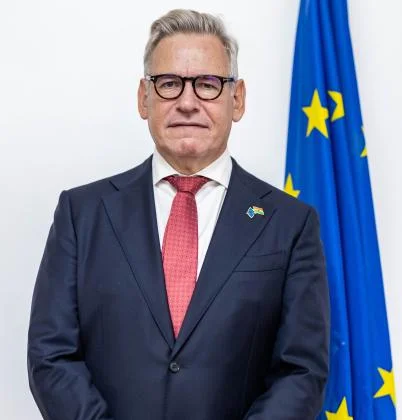
Rune is the Ambassador of the European Union to Ghana
SOURCE: https://thebftonline.com/article/why-the-eu-ghana-partnership-matters