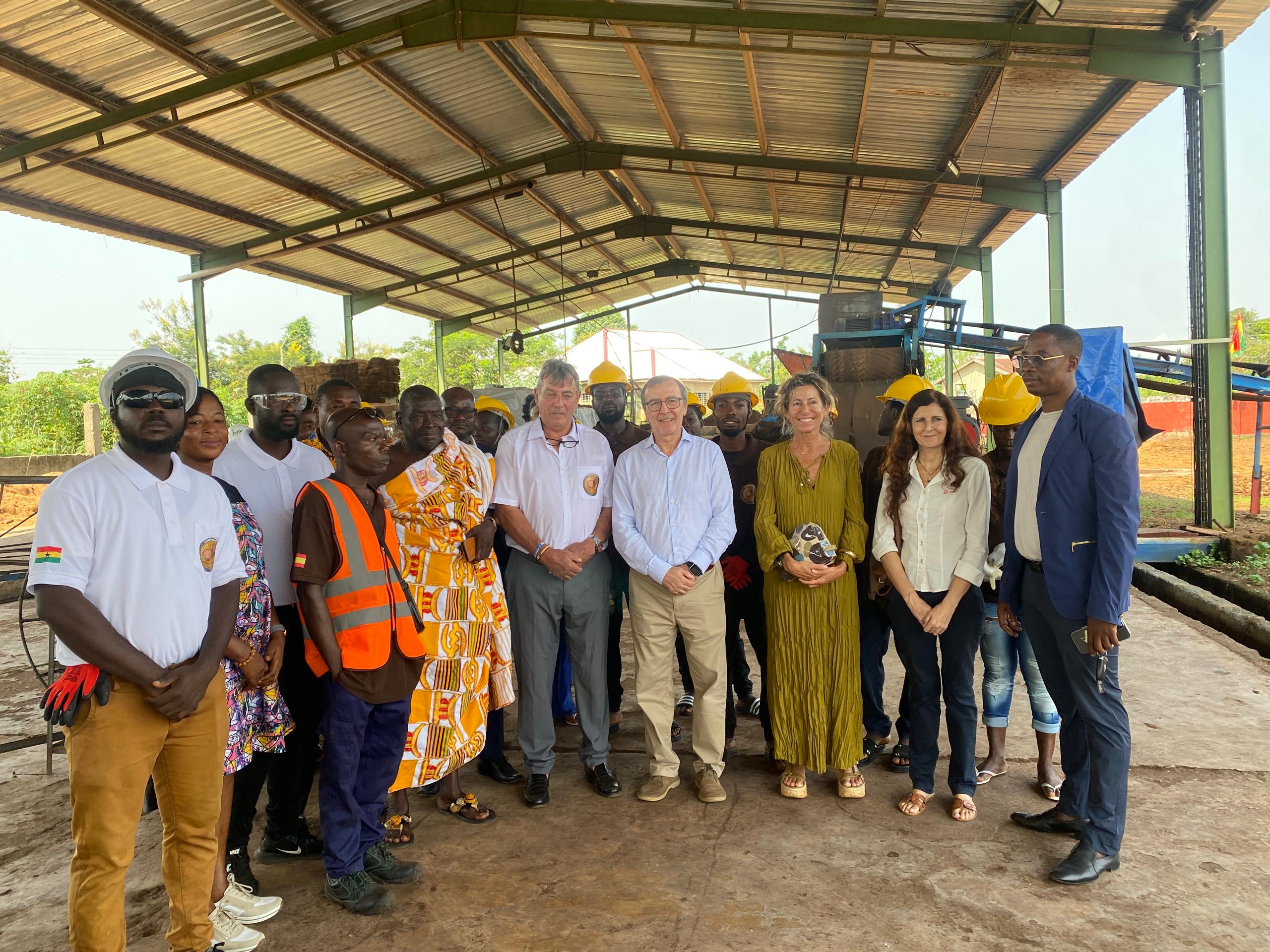
A delegation led by the Spanish Ambassador to Ghana, H.E. Ángel Lossada Torres-Quevedo, accompanied by members of his team and representatives of the Spain-Ghana Chamber of Commerce (SGCC), recently visited the site of an exciting new industrial initiative by COREGHACO LTD, a company pioneering the production of COCOPEAT from coconut shells.
Also in attendance was the Chief of Mamfe, whose presence highlighted the importance of the project to the local community and the role such initiatives can play in supporting regional development.
The visit provided an opportunity for guests to observe firsthand the innovative process through which discarded coconut shells are transformed into a valuable agricultural product. COCOPEAT, a natural growing medium widely used in horticulture, is produced by processing coconut husks into a nutrient-rich, environmentally friendly substrate that supports plant growth while helping to reduce agricultural waste.
During the tour, Jorge Casas Calvo, CEO of COREGHACO LTD, welcomed the delegation and guided them through the various stages of the production process. He highlighted the company’s commitment to sustainable practices and explained how the initiative aims to convert agricultural by-products into a commercially viable product that contributes to a circular economy while creating new opportunities within the agribusiness sector.
Ambassador Lossada Torres-Quevedo commended the initiative for its innovative and environmentally responsible approach, noting its potential to strengthen cooperation and investment between Ghana and Spain. Members of the SGCC also emphasized the importance of projects like this in driving innovation, supporting local industry, and expanding Ghana’s presence in international agricultural markets.
The visit concluded with discussions on potential areas of collaboration and the broader role sustainable manufacturing can play in promoting economic growth and environmental stewardship. COREGHACO LTD’s COCOPEAT initiative stands as a promising example of how resourcefulness and innovation can transform agricultural waste into products with global relevance.